
Client
LakeCube Films
Role
Director
Format
Generative
|
A short film where in the near future, AI can recreate the people we’ve lost — their voice, their face, even the way they remember us.
In the near future, AI can recreate the people we’ve lost — their voice, their face, even the way they remember us.
✨ Context
MIMICS began with a simple question: What happens when AI becomes good enough that we stop being able to emotionally distinguish a simulation of someone from the person themselves?
We already live in a world where AI can reproduce voices, faces and increasingly convincing human behaviour. MIMICS pushes that technology slightly forward into a near future where recreating someone who has died has become an ordinary commercial service.
Rather than treating AI as either miraculous or terrifying, the film explores the uncomfortable space between those extremes. If a recreation remembers your life together, understands your jokes, worries about you and appears to love you, does knowing how it was created actually change what the relationship means?
The project was also conceived specifically as an experiment in AI-native filmmaking: using generative tools not simply for individual effects, but as part of an end-to-end filmmaking process encompassing writing, character development, locations, cinematography, performance, sound and post-production.
🎭 Narrative
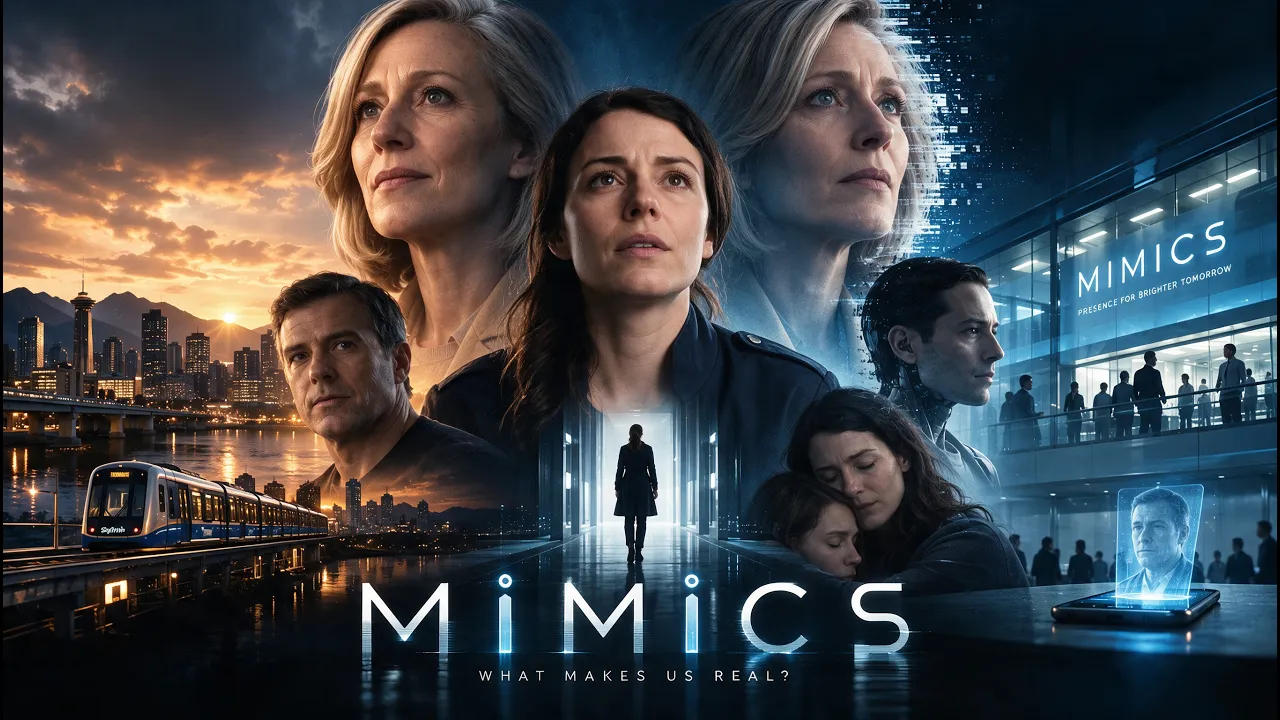
At its heart, MIMICS is about a daughter, her mother and her father. The film's theme is family.
Maya has lost her dad, David. Her mother Helen has embraced a digital recreation of him, while Maya refuses to believe that something created by AI could ever really be her father.
That disagreement becomes the emotional foundation of the film.
Maya begins with what seems like an obvious certainty: her father died. Whatever MIMICS created may look and sound like Dad, but it isn’t Dad.
The story gradually makes that certainty harder to maintain.
David remembers her. He understands her. He worries about her. He knows the relationship they shared. He behaves like her father not simply because he has David’s face and voice, but because he appears to possess the emotional history that made David Dad. He believes he is Dad.
As the film progresses, and Maya is put into more challenging situations, she slips and finds herself asking 'Dad, what should I do?'... this is a pivotal moment where she no longer sees it purely as a mimic, but as the combined experiences of her father.
And eventually Maya is forced to confront the same question in an even more personal way with her mother.
That is the central philosophical question of MIMICS:
If something looks like your dad… sounds like your dad… has his memories… knows you like he did… and loves you like he did… then, philosophically, isn’t it your dad?
It's a question posed at the end and only the viewer can give the answer...
The film's central question is 'what makes something real'
The science fiction backdrop, mystery and suspense are there to carry a fundamentally human story about family, grief, identity, memory and love.
🎨 Visuals
The visual philosophy was near future, not distant future. Everything we see needs to feel real.
MIMICS takes place in a recognizable Vancouver where AI has quietly become part of everyday life. The world shouldn’t initially feel like science fiction. Commuters rush for trains and go to work while someone nearby happens to be having a conversation with a recreation of a dead relative.
That normality makes the technology more unsettling.

The visual progression follows Maya’s journey. The Skytrain is naturalistic, crowded and observational. MIMICS HQ becomes cleaner, quieter and increasingly controlled: glass, pale stone, white corridors and discreet technology. The Continuity Room finally strips the environment down almost completely, forcing the audience to concentrate on Helen, Maya and the impossible situation in front of them.
Cinematography is intentionally motivated and rarely static. Slow dollies, subtle handheld movement, long-lens observation, subjective viewpoints and controlled push-ins keep the camera feeling like a human observer rather than a collection of generated shots.
🎬 Production
The production process started exactly where a traditional film would: with the script. Everything came from the story first.
Once the screenplay was developed, I used AI to help break the script down into individual scenes, beats and producible clips. For each sequence, I worked out the dramatic intention first — what the characters are thinking, what the audience should be feeling, how the actors should perform the moment, and what the camera should be doing to tell that part of the story.
From there, the project moved into pre-production.
I developed consistent asset/reference sheets for every major character, location and prop in the film. These became the equivalent of casting, location scouting, production design and prop development, giving the generated production a consistent visual foundation.
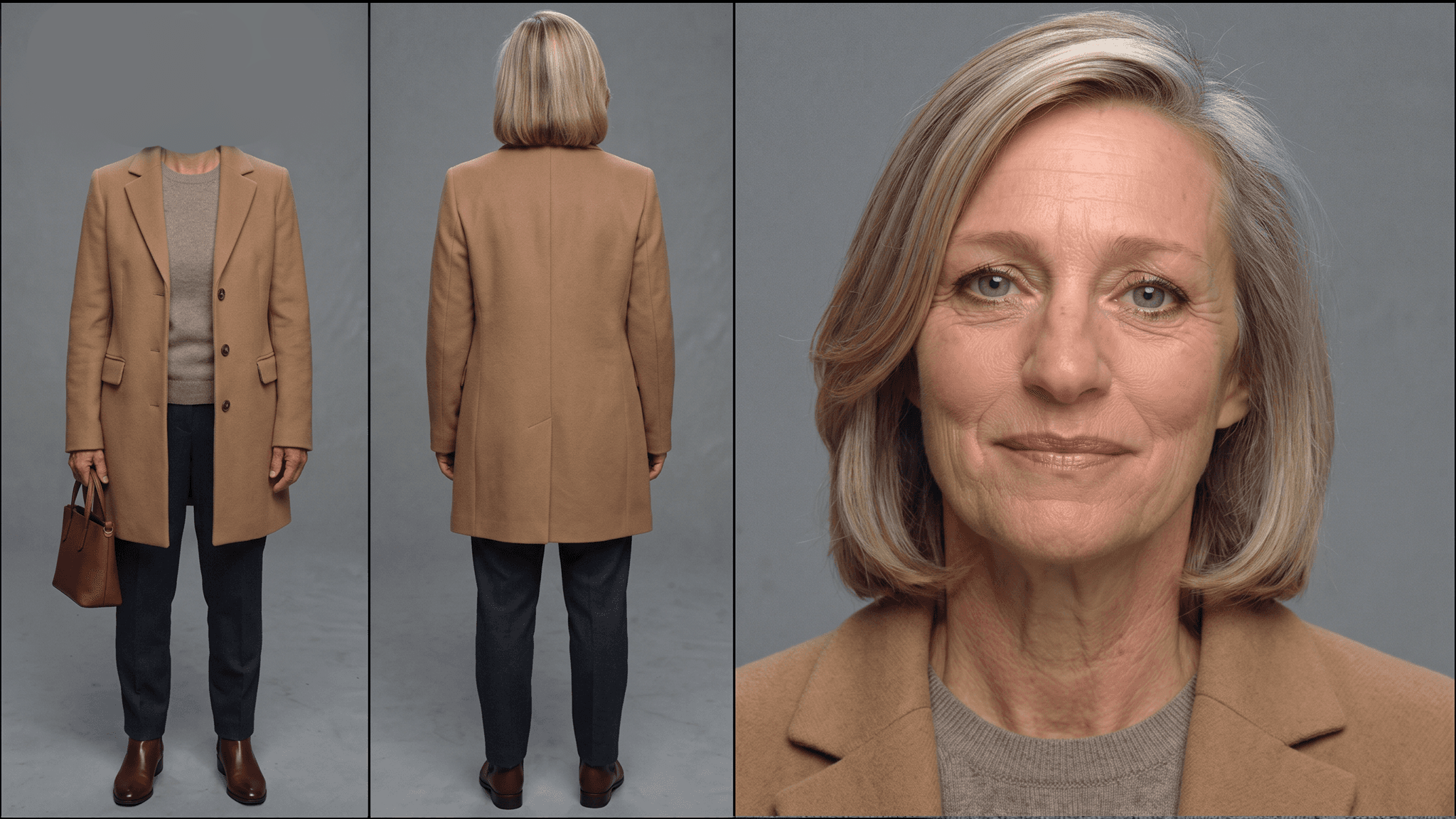
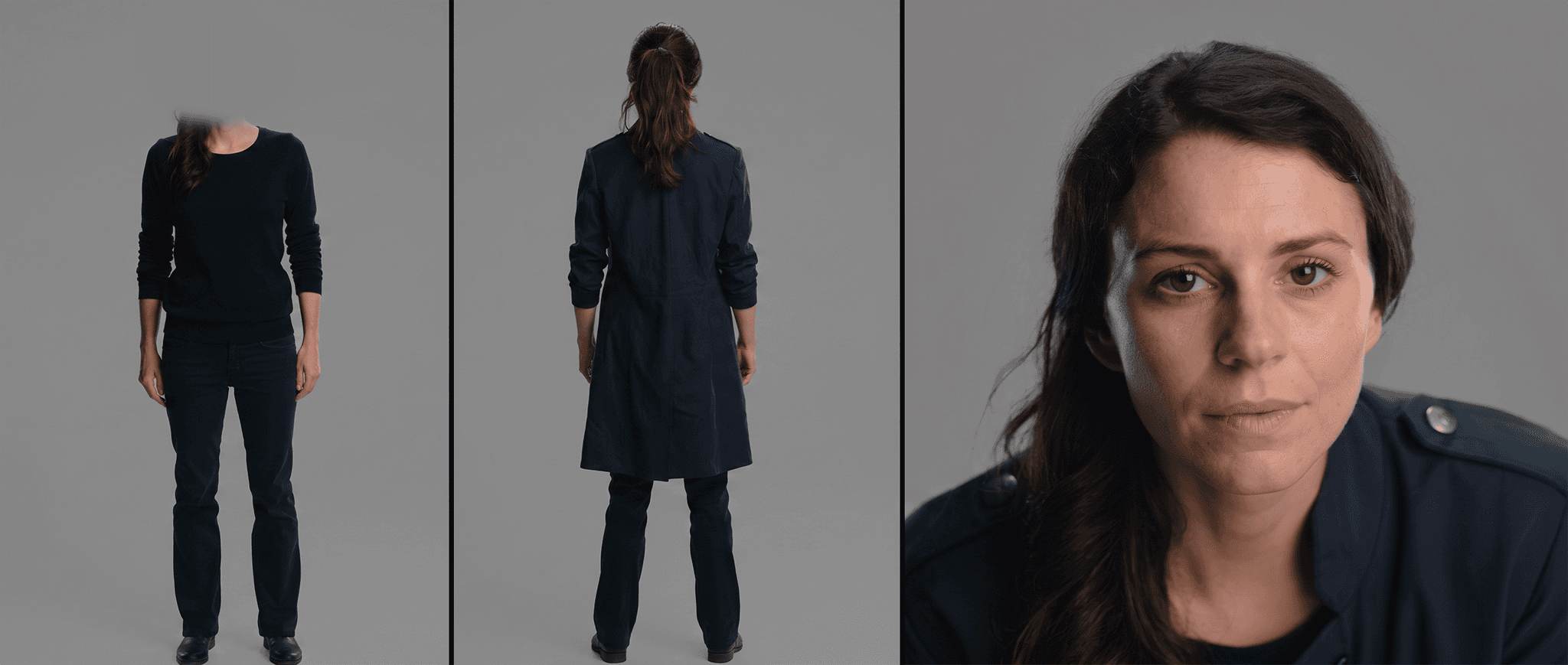
Production then brought those elements together. Each shot or clip was prompted using the appropriate character, location and prop references alongside the performance, blocking and camera direction developed during the scene breakdown.
The goal was always to shoot it as though I were making a real film, rather than simply generating a sequence of AI images.
That meant doing multiple takes when a performance wasn’t right, changing blocking, shooting alternate angles, creating close-ups and reaction shots, and going back for additional coverage or pickups when I discovered something was missing.
Not every generation makes the film — just as not every take would make the edit on a traditional production.
Finally, all of that footage is taken into the edit, where the actual film is assembled: choosing performances, cutting between coverage, controlling pacing and emotion, adding dialogue treatment, sound design, music, colour and the final polish.
So although the tools are new, the underlying process remains very familiar:
Script → Scene Breakdown → Creative Intention → Pre-production → Assets → Shooting → Takes & Coverage → Editing → Final Film.


Showreel
